

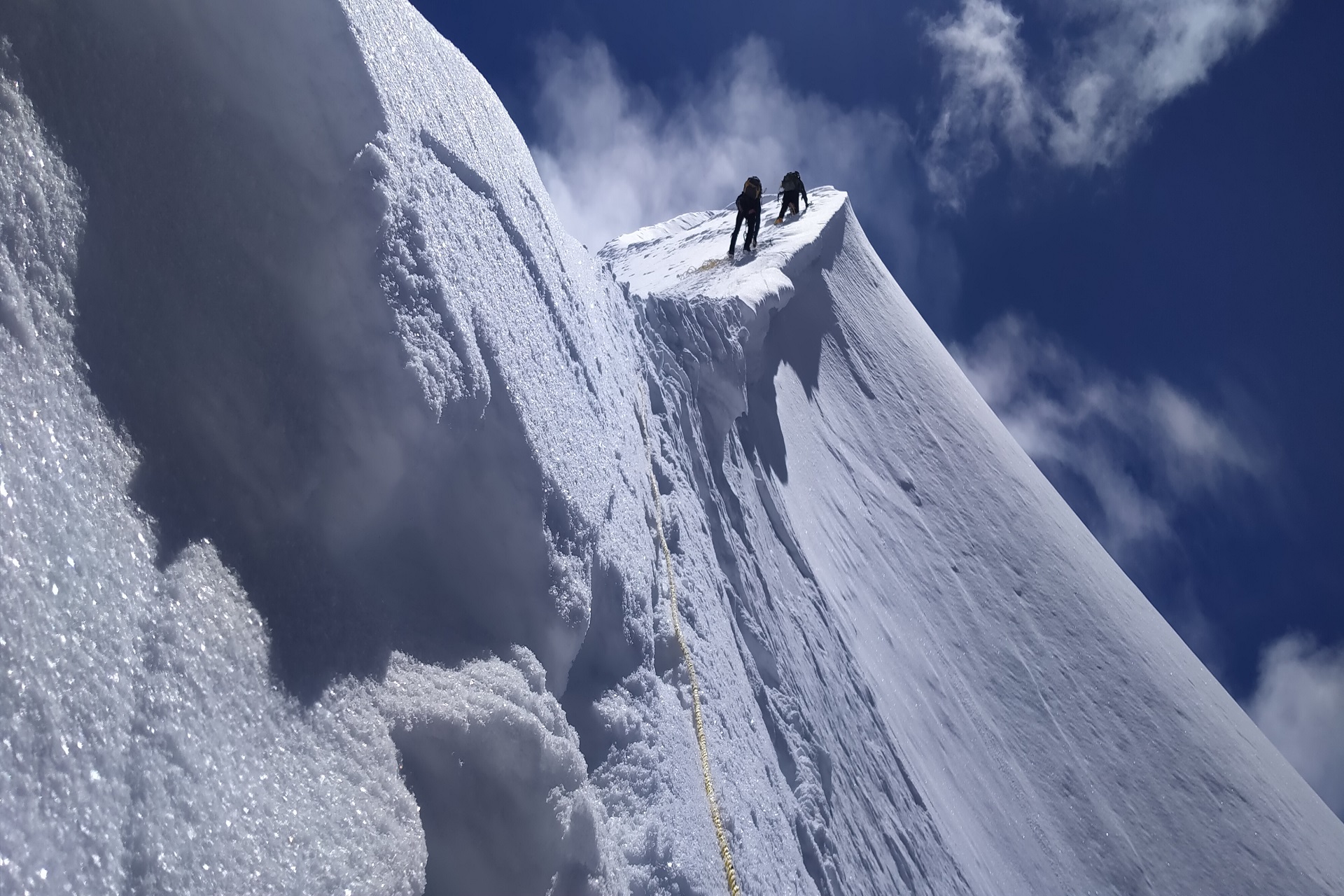
Ultimate Winter training in Ladakh: Prepare for 8000m Peaks with Guide the Himalaya
The crisp morning light glimmers on Ladakh’s frozen waterfalls, where climbers secure their crampons and grip their ice axes tightly, ready to master the skills that will take them to the pinnacle of mountaineering—real ice climbing training that prepares you for the world’s highest and most challenging mountains, including Everest and K2. This is not your average climbing course. This is an intensive transformation from a passionate mountaineer into a highly skilled alpinist, equipped for the rigors and technical mastery required at 8000 meters.
Guide the Himalaya, led by its inspiring founder Skalzang Rigzin—a renowned mountaineer and respected IFMGA-certified guide—offers this exclusive 15-day ice climbing and expedition skills training in Ladakh’s breathtaking landscape. Alongside this, we are also proud to provide specialized winter training programs in Ladakh, focusing on delivering the most complete preparation possible for aspiring high-altitude climbers.
Why Choose Ladakh for Ice Climbing Training?
Ladakh is singularly suited for alpine training, with its unparalleled combination of high altitude, dramatic frozen waterfalls, and a climate that creates perfect icy conditions throughout winter. Unlike the crowded and often unpredictable European climbing sites, Ladakh’s cold desert environment ensures stable ice formations from December through March, offering consistent conditions for rigorous skill advancement every training day.
At about 3,500 meters elevation, the training locations also offer natural acclimatization benefits. The clean mountain air and lower oxygen levels initiate physiological adaptations that prepare the body for the thin air on the slopes of Everest, K2, and other great Himalayan giants. This acclimatization coupled with expert instruction allows climbers to maximize training effectiveness and safety while building vital mountaineering skills.
The variety of frozen terrain Ladakh offers—from steep, jagged icefalls to sprawling glaciers—perfectly simulates the technical and environmental challenges faced on 8000-meter expeditions. Climbers hone their ability to read and assess ice quality, manage complex rope systems, and execute precise movements on demanding vertical ice routes—capabilities crucial for survival and success in the death zone.
Meet Skalzang Rigzin: Your Mentor and Guide
Skalzang Rigzin, the founder of Guide the Himalaya, embodies the spirit and expertise that define this training. Born in Nepal’s mountainous heartlands and having spent decades guiding on the world’s highest peaks, his experience as an IFMGA-certified guide makes him one of the most respected mountaineering instructors in the Himalaya. Through countless expeditions, including multiple successful summits of 8000-meter peaks, Skalzang has developed a teaching philosophy focused on technical precision, mental resilience, and life-saving judgment.
His instructional approach transcends mere technique. Drawing from firsthand encounters with the hazards and pressures of extreme altitude climbing, Skalzang emphasizes not only physical skills but also the mental discipline, risk assessment, and decision-making that determine success or failure—and even life and death. Each participant benefits from his personal mentorship and that of his expert team of carefully selected assistant guides, all accomplished climbers with their own impressive credentials.
The small class sizes, limited to no more than six climbers per session, ensure personalized coaching tailored to individual strengths, weaknesses, and pace of learning. This intensive mentorship creates an ideal learning environment where participants can confidently develop the technical and psychological skills necessary for challenging mountaineering pursuits.
Comprehensive Winter Ice Climbing Training
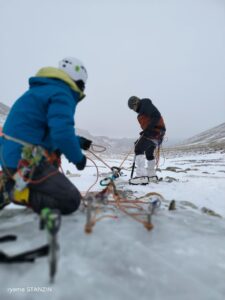
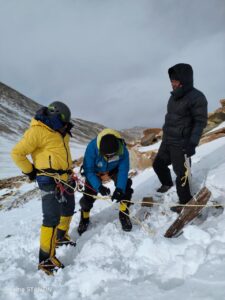
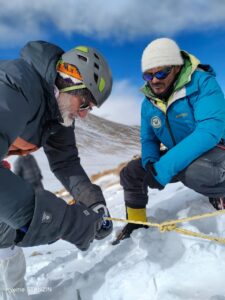
Ladakh’s winter training programs leverage the region’s natural ice formations to provide a full spectrum of ice climbing instruction. From the basics of crampon fitting and ice axe use to advanced rope work and crevasse rescue techniques, the curriculum is designed to prepare climbers for the complexities of high-altitude climbing.
Technical Skill Development
Training covers essential ice climbing movements, including the French technique for moderate-angle ice, stepping onto vertical ice, and type-semblant for efficiency and safety on long glacier routes. Climbers practice placement of ice screws for protection, anchor building on ice, efficient belaying, rappelling, and managing rope systems—a crucial life skill when navigating steep and exposed ice faces.
Participants advance to practicing ladder crossings, an indispensable skill when dealing with crevasse hazards on peaks like Everest’s Khumbu Icefall. Training includes various ladder configurations and conditions, building muscle memory and confidence to safely negotiate unstable, exposed crossings carrying full expedition gear.
Jumar or mechanical ascender use is another core skill taught comprehensively, vital for ascending fixed ropes commonly encountered on high-altitude climbs. Techniques to minimize energy expenditure, maintain steady pace, and manage fatigue are drilled under realistic conditions, including carrying heavy packs laden with oxygen and survival gear.
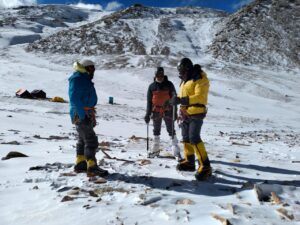
Expedition Readiness
Besides technical competence, climbers develop the expedition management skills necessary for success. This includes training in building efficient rope and haul systems, performing crevasse rescue drills under pressure, and learning how to modify and repair gear in the field. Participants practice self-rescue techniques and partner rescue scenarios repeatedly to ensure those skills become second nature.
The program emphasizes the physical demands of climbing at altitude through daily endurance training combined with strategic nutrition and hydration protocols, optimizing cardiovascular fitness and muscle strength in climbing-specific movements.
Mental Conditioning and Safety Focus
Mental resilience training runs alongside technical skills development throughout the program. The founder shares insights into managing fear, exhaustion, and stress in extreme environments, encouraging climbers to employ visualization techniques and mental rehearsal to prepare for challenging routes.
Group discussions foster awareness of team dynamics, leadership, ethical responsibilities, and how to maintain composure and situational awareness when conditions deteriorate or emergencies arise. Safety is paramount in every session, guided by the founder’s extensive rescue experience and strict protocols that include daily weather assessments and altitude sickness monitoring.
Participants gain familiarity with the highest quality mountaineering equipment, using tools and clothing that meet or exceed expedition standards. Instruction covers equipment selection, maintenance, and field repair—indispensable knowledge for self-sufficiency in remote high-altitude zones.
Altitude Acclimatization and Physical Benefits
The extended duration of the training, conducted at natural altitude around 3,500 to 4,800 meters, stimulates physiological adaptation critical to mountain success. Increased red blood cell production and improved oxygen utilization give participants a head start when arriving at base camps of major expeditions.
The training’s demanding regimen improves cardiovascular capacity, core stability, and specific muscle groups involved in ice climbing and alpine movement. These physical gains translate directly into enhanced endurance and strength necessary for sustained effort on difficult mountain terrain.
Build Lasting Networks and Support
Beyond skills and physical conditioning, the program facilitates the creation of a robust network of like-minded climbers. Relationships forged through shared hardship and achievement during training often evolve into expedition partnerships. Graduates of Guide the Himalaya’s programs form a community that supports each other’s ambitions with advice on climbing conditions, equipment recommendations, and team formation.
The founder maintains active contact with alumni, offering guidance on navigating the demands of 8000-meter expeditions and sharing updates that help climbers stay connected to the rapidly changing Himalayan mountaineering environment.
Safety Protocols and Support Systems
Safety underpins every step of the training experience. The comprehensive risk management includes continuous altitude illness monitoring and immediate access to medical evacuation procedures if needed. The founder’s leadership ensures that all activities are conducted with conservative safety margins to mitigate objective dangers inherent in ice and high-altitude climbing.
Cooperation with local rescue services and hospitals provides an added layer of security, while participants receive instruction in emergency communication and rescue techniques. This integrated safety approach allows climbers and their families to feel confident even in such a challenging environment.
Your Pathway to 8000m Success
Upon completing the program, climbers emerge ready for 8000-meter expeditions with internationally recognized certification valued by top expedition operators. The skills mastered, judgment developed, and confidence gained provide a solid foundation not only for summit attempts but for long-term mountaineering careers focused on safety and success.
Investing in winter training in Ladakh is a strategic decision. Considering that mountaineering high-altitude expeditions can cost tens of thousands of dollars, gaining comprehensive training reduces risks, increases chances of success, and ultimately safeguards your investment—your life and your dreams.
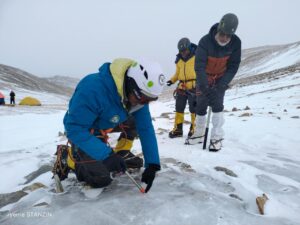
Join Guide the Himalaya’s Winter Training in Ladakh
The gateway to your Himalayan ambitions begins here. Guide the Himalaya offers limited winter training slots to preserve quality and safety, typically opening four sessions each season aligned with the best ice conditions in Ladakh. Personalized attention, expert coaching, and Ladakh’s pristine alpine environment combine to create a unique opportunity to elevate your mountaineering to new heights.
Your journey to mastering ice and preparing for 8000-meter climbs starts with a single confident swing of the ice axe on Ladakh’s frozen walls. The skills and experience gained here are lifelong assets, equipping you with the judgment and poise needed to embrace the world’s greatest mountains safely and successfully.
Contact Guide the Himalaya today to reserve your place in this transformative winter training program. The mountains are calling—answer with skill, resilience, and confidence.